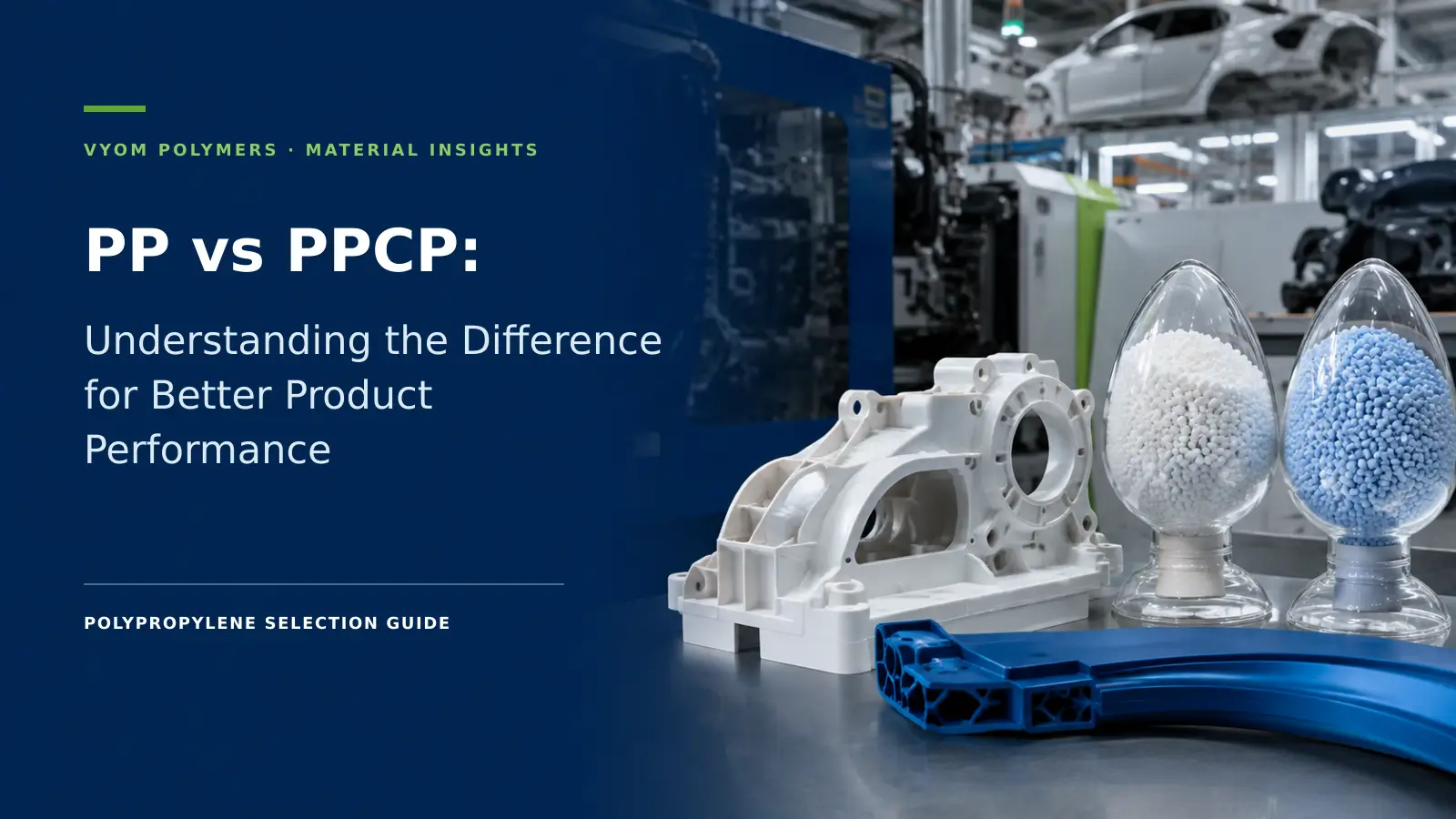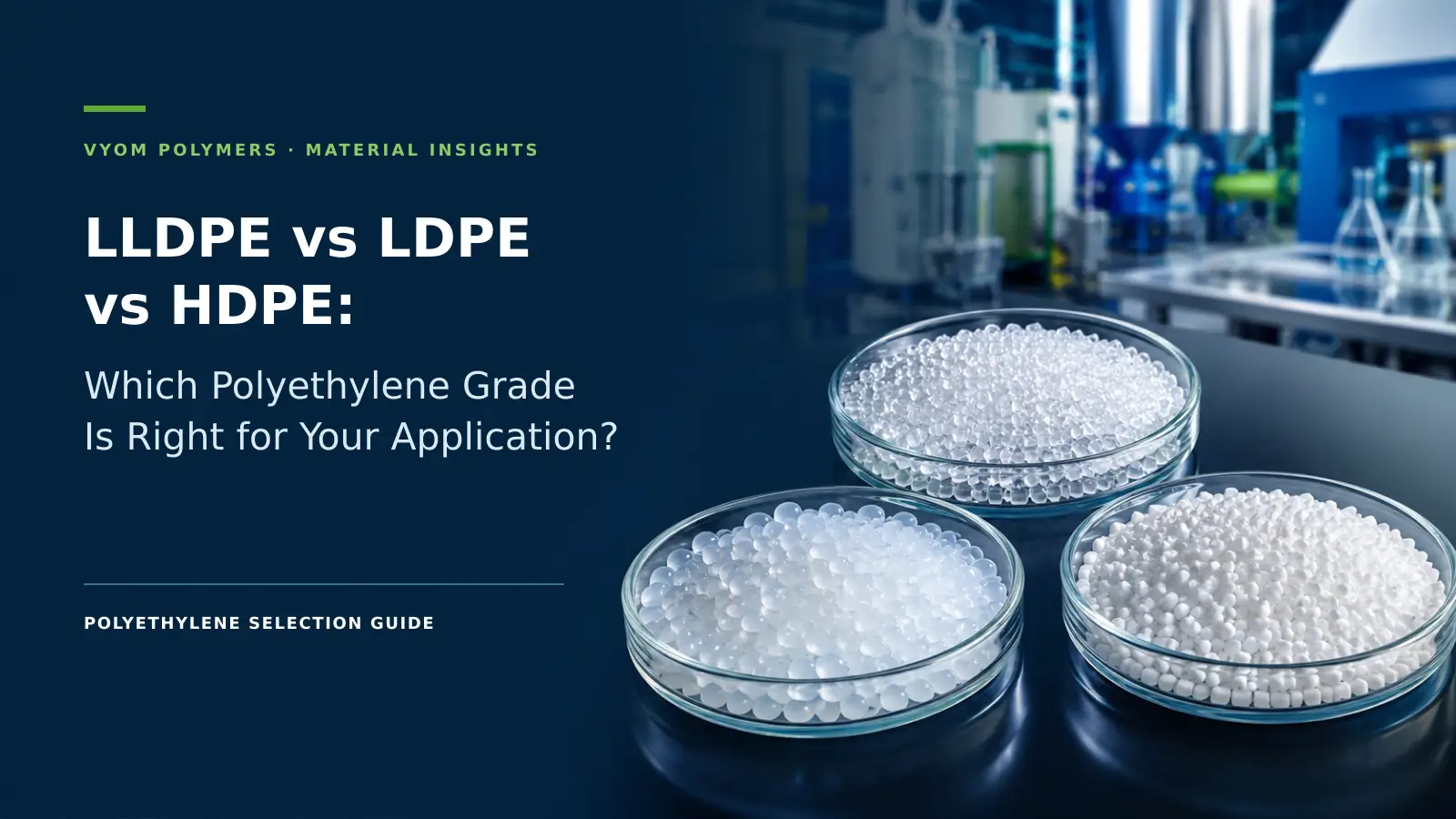

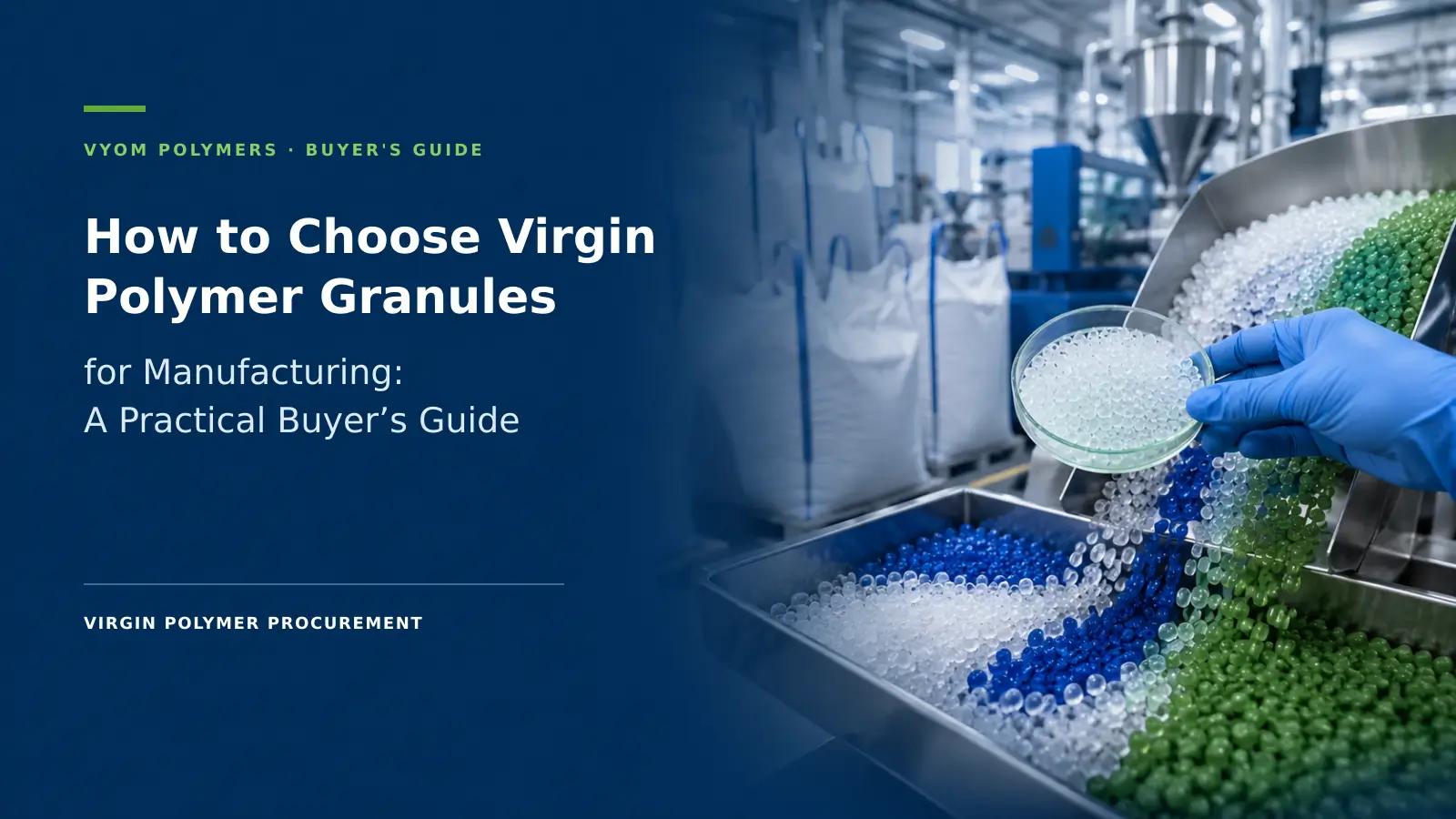
Why polymer selection requires more than a material name
Buying plastic raw material can appear straightforward: identify the polymer, compare quotations and place an order. In practice, two grades carrying the same broad polymer name can perform very differently. Melt flow, density, molecular structure, additives and intended conversion process all influence machine behaviour and finished-product performance.
For manufacturers using LLDPE, LDPE, HDPE, PP, PPCP, PVC, EVA, PET, ABS or PS, a disciplined selection process reduces production instability and quality risk. It also helps purchasing teams compare offers on technically equivalent terms rather than relying only on headline price.
1. Start with the finished product
Define what the component must do during its service life. A flexible film needs a different balance of elongation, tear resistance and sealing from a rigid crate. A bottle requires process behaviour suited to blow moulding, while an injection-moulded automotive component may need flow, impact resistance and dimensional stability.
Document the critical requirements before requesting a grade: stiffness or flexibility, impact strength, transparency or opacity, chemical contact, temperature range, expected lifespan, colour, finish and regulatory needs. This becomes the technical basis for supplier discussions and trials.
2. Match the resin to the processing method
Polymer families contain grades developed for specific conversion routes. Common processes include blown film, cast film, injection moulding, blow moulding, pipe extrusion, profile extrusion, thermoforming, rotational moulding and fibre or raffia production. A material that performs well in one process may be unsuitable in another even when the base polymer is the same.
Provide machine type, typical temperature window, tool or die information, part weight and wall thickness wherever possible. These details help narrow the required melt-flow range and processing characteristics.
3. Understand melt flow index
Melt flow index, often written as MFI or MFR, indicates how readily a molten thermoplastic flows under specified test conditions. Higher-flow materials may fill thin or complex mould sections more easily, while lower-flow materials can support other strength and extrusion requirements.
MFI must never be compared without checking the test temperature and load stated in the data sheet. It is also not a complete measure of quality. Two materials with a similar MFI can still differ in impact performance, molecular weight distribution, additives and processing stability.
4. Review the complete technical data
A technical data sheet helps buyers compare relevant properties, but the correct parameters depend on the application. For flexible materials, tensile, elongation, tear and dart impact may matter. For rigid moulded parts, flexural modulus, tensile strength, impact values, heat performance and shrinkage can be important. For clear products, haze, gloss and clarity may require review.
Use the data sheet as a screening tool and confirm performance through controlled trials. Published values are generally typical rather than guaranteed limits unless the supplier explicitly states otherwise.
5. Confirm additive and compliance requirements
Many commercial grades contain additives for slip, antiblock, UV resistance, heat stability, antistatic behaviour, nucleation or processing support. These additives can affect printing, sealing, appearance and downstream performance. Buyers should specify whether a natural, additive-free or specially stabilised grade is required.
Where the product is intended for food packaging, medical use, drinking-water contact, electrical use or another regulated application, request appropriate declarations and supporting documentation for the exact grade. Compliance should never be assumed from the polymer family alone.
6. Evaluate consistency and traceability
Virgin polymer granules are valued for controlled composition and predictable processing. Even so, procurement teams should examine batch identification, original packaging, storage condition and documentation. Material exposed to moisture, dust, heat or damaged packaging can create avoidable production issues.
A dependable supplier should communicate the grade, manufacturer, batch or lot reference where available, packaging format and supply terms clearly. Consistency is particularly important for customers with validated products, tight colour standards or high-volume continuous production.
7. Calculate total production value—not only price per kilogram
Material price is important, but it should be considered alongside conversion performance. Frequent machine adjustments, excess scrap, slow cycles, breakage or customer complaints can outweigh a small saving on resin purchase. Compare yield, rejection rate, energy and cycle impact, finished-product weight and supply reliability when assessing alternatives.
Questions to ask a polymer supplier
- Is the grade recommended for my specific process and application?
- What are the melt flow, density and key performance properties?
- Is the material fresh and virgin, and is it supplied in original or clearly identified packaging?
- Which additives are present or available?
- What technical and compliance documents can be provided?
- Is the grade consistently available in the required quantity?
- Can a trial quantity be arranged before regular commercial supply?
Frequently asked questions
What are virgin polymer granules?
Virgin polymer granules are newly manufactured resin pellets that have not previously been processed into finished plastic products. They are typically selected where controlled composition, appearance and repeatable performance are priorities.
Which polymer is best for manufacturing?
There is no universal best polymer. The correct choice depends on the product design, process, mechanical requirements, temperature, chemical exposure, appearance, regulation and commercial target.
Why is trial production important?
A trial confirms how the material behaves on the actual machine, tooling and operating conditions. It can reveal differences in flow, shrinkage, finish, strength and cycle behaviour before full-scale procurement.
What information should be shared when requesting a quotation?
Share the polymer family, preferred manufacturer or grade if known, application, processing method, required quantity, colour, delivery location and any essential technical or compliance requirements.
Build a dependable polymer sourcing process
Vyom Polymers supplies fresh and virgin LLDPE, LDPE, HDPE, PP, PPCP, PVC, EVA, PET, ABS and PS granules for manufacturers and processors. We focus on understanding the application and coordinating material options that support performance, processing and supply continuity.
For product enquiries, call +91 85951 49912 or email vyompolymer@gmail.com. Office: 1174, 11th Floor, Gaur City Mall, Greater Noida West, Uttar Pradesh 201318.