Understanding the polyethylene family
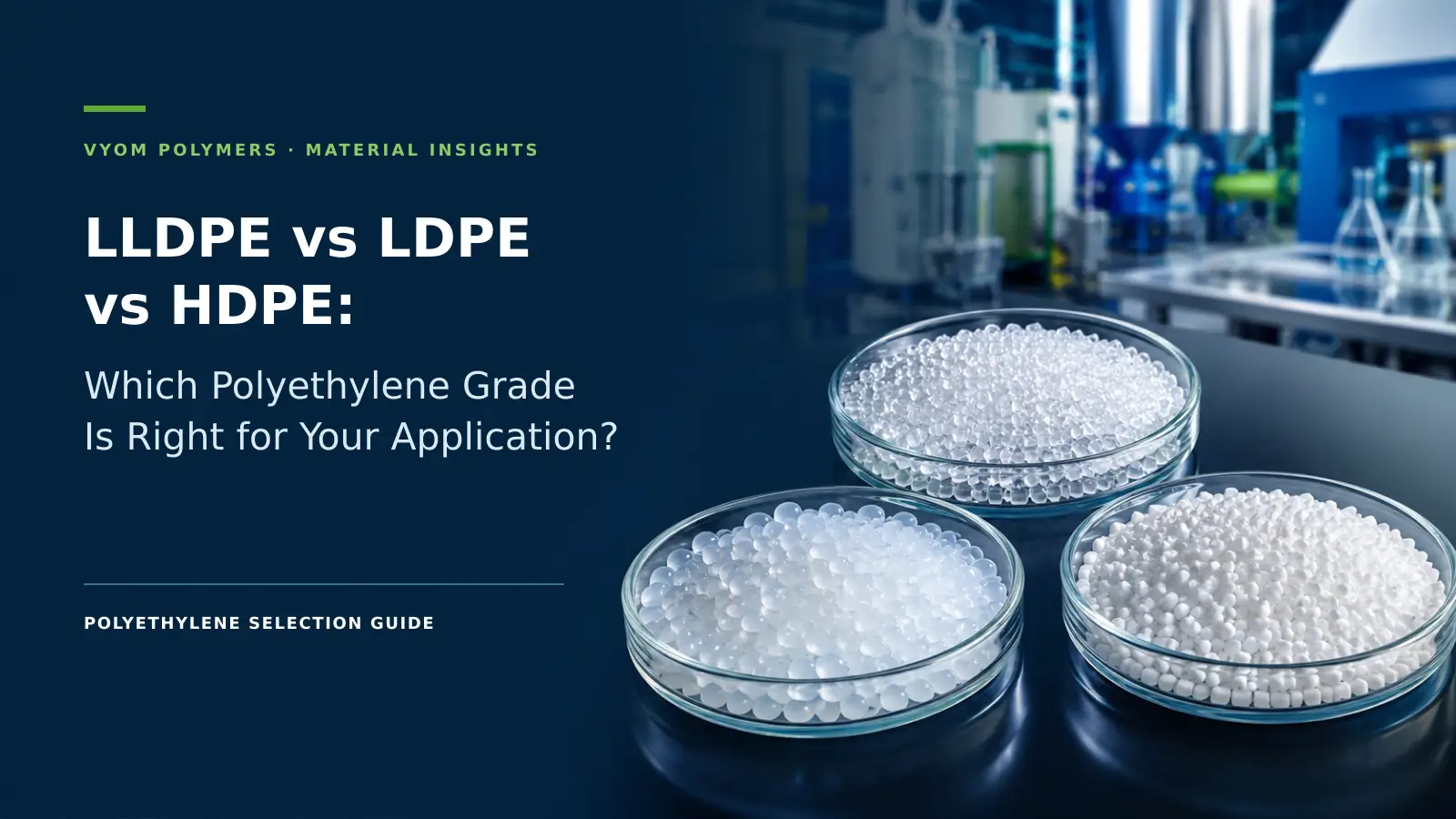
Polyethylene is one of the most widely used thermoplastics because it is lightweight, process-friendly, moisture resistant and suitable for an extensive range of products. However, polyethylene is not a single material. LLDPE, LDPE and HDPE differ in molecular structure, density and performance, which directly influences how each grade behaves during processing and in the finished product.
For manufacturers, the correct choice is not simply the grade with the highest strength or lowest cost. The material must match the application, processing method, thickness target, flexibility requirement and expected service conditions. A structured comparison helps procurement and production teams avoid quality variation, unnecessary material consumption and processing challenges.
What is LLDPE?
Linear Low-Density Polyethylene, commonly called LLDPE, combines flexibility with strong puncture and impact resistance. Its linear molecular structure with controlled short-chain branching gives the material better tensile strength than conventional LDPE at comparable thicknesses.
LLDPE is widely considered for stretch films, liners, flexible packaging, agricultural films, rotational moulding and products that need to bend or stretch without tearing. It also blends well with other polyethylene grades when processors want to balance sealability, stiffness and mechanical performance.
Key characteristics of LLDPE
- High flexibility and elongation
- Strong puncture, tear and impact resistance
- Suitable for downgauging in many film applications
- Good environmental stress-crack resistance
- Commonly processed through film extrusion, extrusion coating and rotational moulding
What is LDPE?
Low-Density Polyethylene, or LDPE, has a highly branched molecular structure. This gives it a soft feel, good clarity and excellent processability. It flows and seals easily, making it useful when smooth processing, flexibility and appearance are important.
LDPE is commonly used in flexible films, squeeze bottles, cable insulation, lamination, extrusion coating and general-purpose moulded products. Compared with LLDPE, it generally offers easier processing and better optical properties, while LLDPE usually provides stronger puncture and tensile performance.
Key characteristics of LDPE
- Soft and flexible material behaviour
- Good transparency in suitable film grades
- Easy heat sealing and processing
- Good moisture resistance
- Suitable for film, coating, insulation and flexible moulded products
What is HDPE?
High-Density Polyethylene, or HDPE, has a more linear and tightly packed molecular structure than LLDPE and LDPE. The result is greater stiffness, tensile strength and resistance to many chemicals. HDPE is selected where the finished product must retain its shape or perform under higher mechanical load.
Typical applications include rigid containers, drums, crates, caps and closures, household products, pipes, fittings and blow-moulded components. The exact grade must still be matched to the processing method because film, pipe, injection-moulding and blow-moulding grades are designed around different flow and performance requirements.
Key characteristics of HDPE
- Higher rigidity and strength
- Good resistance to moisture and many chemicals
- Strong dimensional stability
- Suitable for injection moulding, blow moulding, pipe extrusion and film
- Available in application-specific melt-flow and density ranges
How to choose between LLDPE, LDPE and HDPE
Start with the performance expected from the finished product. For stretchability, impact resistance and puncture strength, LLDPE is often the preferred starting point. For softness, clarity, coating behaviour and easy sealing, LDPE may be more suitable. For rigidity, load-bearing performance or chemical resistance, HDPE is generally the stronger candidate.
The processing route is equally important. A resin suitable for blown film cannot automatically replace a blow-moulding or injection-moulding grade. Melt flow index, density, additives, thermal stability and machine conditions must be reviewed together. Where regulatory or food-contact requirements apply, manufacturers should also request the relevant grade documentation and supplier declaration.
Practical procurement checklist
- Define the end application and processing method
- Confirm required density and melt flow range
- Review tensile, impact, stiffness and sealing requirements
- Check colour, clarity and additive needs
- Validate regulatory, food-contact or technical documentation where applicable
- Conduct a production trial before changing an established grade
Frequently asked questions
Is LLDPE stronger than LDPE?
LLDPE generally offers higher tensile, puncture and impact strength, while LDPE is often selected for softness, clarity and easier processing. The correct answer depends on the specific grade and application.
Can LLDPE and LDPE be blended?
Yes. Film processors frequently blend compatible grades to balance strength, clarity, sealing behaviour and processing stability. The blend ratio should be validated through trials.
Which polyethylene is used for rigid containers?
HDPE is commonly used for rigid bottles, cans, drums and containers because it offers higher stiffness and good chemical resistance. A suitable blow-moulding or injection-moulding grade should be selected.
How should a buyer select a polyethylene supplier?
Evaluate grade consistency, documentation, traceability, supply reliability, packaging condition and the supplier’s ability to recommend grades for the intended process.
Source the right polyethylene grade
Vyom Polymers supports manufacturers and processors with fresh and virgin LLDPE, LDPE and HDPE granules for diverse processing requirements. Share your application, process and expected properties with our team to identify appropriate material options and plan dependable supply.
Call +91 85951 49912 or email vyompolymer@gmail.com to discuss your requirement.